
What the Wright Brothers Can Teach a Brand-New Business About the First Year
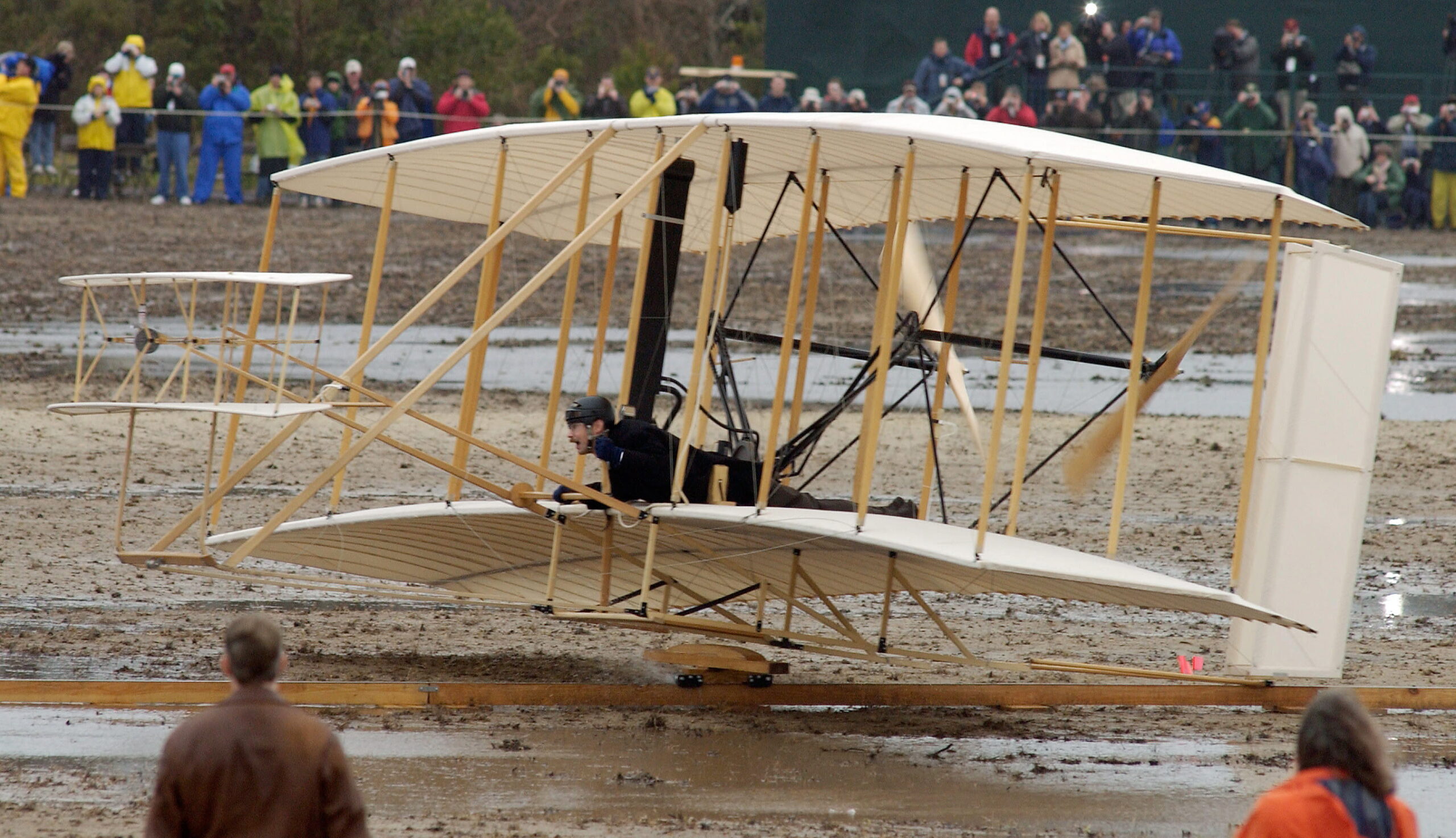
In 1903, two brothers who repaired bicycles for a living flew the first powered, controlled aircraft in human history. They had no degree, no investor, no team of engineers — just a small shop in Dayton, Ohio, a stubborn curiosity, and each other. If you are a sole trader staring down your first year in business, that story should feel oddly familiar.
Starting out on your own is a pioneer phase. You are experimenting, breaking things, fixing them, and learning in public — usually with very little help beyond a partner who believes in you. The Wright brothers did exactly that. Their path from bike repair to flight is one of the clearest blueprints we have for how a tiny operation turns trial and error into something that actually works.
They Didn't Start With an Aeroplane. They Started With a Business.
It's tempting to imagine the Wrights as visionaries who set out to conquer the sky. The reality is more grounded. In 1892 they opened the Wright Cycle Company in Dayton, selling and repairing bicycles. It was a real, functioning small business — and a successful one. Crucially, it gave them two things every founder needs: a steady income, and spare time to chase the bigger idea.
Their flying experiments didn't begin in earnest until 1899. For years, the bike shop paid the bills while the obsession grew quietly in the background. The lesson for any new owner is unglamorous but true: the dream often has to be funded by the day-to-day work. The thing paying your invoices this month is what buys you the runway to build the thing you really want.
There's a deeper point here too. The brothers weren't bike-shop owners who got lucky with planes. The skills transferred. Years of precision machining, balancing wheels, working with chains, spokes and light rigid frames became the exact toolkit they used to build a flying machine. The 1903 Flyer was, quite literally, full of bicycle chains and spoke wire. Your current trade is not a detour from your bigger ambition. It is the training for it.
The First Year Is Mostly Problem-Solving Nobody Sees
Most people remember the twelve seconds at Kitty Hawk. Almost nobody remembers the four years of frustrating, unpaid, repetitive work that came first — and that's the part every new business owner actually lives through.
Consider what those years really involved. In 1900 and 1901 the brothers built and flew gliders that underperformed. The lift wasn't there. Rather than guess, they did something remarkable for two shopkeepers: they built their own wind tunnel in the back of the bike shop and tested more than 200 miniature wing shapes.
What they discovered was that the published aerodynamic data the entire field relied on was simply wrong. So they threw out the experts' numbers and trusted their own measurements instead. If you've ever followed the “proven” advice for your industry, found it didn't fit your reality, and quietly built your own way of doing things — you've had a Wright brothers moment.
This is the unseen texture of year one. Testing. Failing. Adjusting. Doing the boring, methodical work of figuring out what's actually true for your business, not what a course or a competitor told you should be true. It rarely looks heroic from the inside. It just looks like a lot of late evenings and small corrections.
A Partner in the Workshop Changes Everything
The Wrights are almost never spoken of individually. It's always “the Wright brothers” — two people, one venture, sharing the risk, the work, and the doubt. They argued constantly, and they credited those arguments with sharpening their thinking. Neither would have flown alone.
Many small businesses run the same way: a sole trader and a husband, wife, or partner doing the parts the founder can't. One keeps the books while the other is on the tools. One handles customers while the other handles the build. That second pair of hands is rarely on the payroll and almost never gets the credit, but it's often the reason the business survives the first winter.
It's worth saying plainly: the brothers also had a sister, Katharine, and a paid mechanic, Charles Taylor, who hand-built their engine when no manufacturer would supply one to their specification. “Doing it on your own” almost always means a small, trusted circle rather than a literal solo act. Knowing who's in your circle — and valuing them — matters more in year one than almost anything else.
Build It Yourself, and You Own It
When no engine builder would make what they needed, the Wrights didn't abandon the project or hand it to someone else. They built their own. That decision is the reason the design was theirs — every component understood, every choice deliberate, nothing dependent on a supplier who could vanish or raise the price.
This is the part that sits closest to how we think at Blue Pilot Agency. The things you build and understand yourself are the things you genuinely own. A business — like an aircraft — is far more reliable when the person flying it knows how every part works, rather than renting the whole thing from someone who keeps the keys. The first year is your chance to build that understanding into the foundations, before things get busy enough to make shortcuts tempting.
Twelve Seconds, and Then the Real Work
Here's the detail that should reassure any founder still grinding through year one: the first flight lasted twelve seconds and covered 120 feet. It was historic — and almost nobody believed it. For roughly three years afterwards, the public and the scientific community largely shrugged. Recognition didn't arrive on schedule.
The brothers kept refining. By 1905, their third machine flew for 39 minutes over a 24-mile course. The breakthrough was the beginning, not the finish line. New businesses tend to expect the opposite: that the launch, the first big client, or the first profitable month is the destination. More often it's the twelve seconds — proof the thing can fly, followed by the longer, steadier work of making it fly well, repeatedly, for anyone watching.
Your Own Pioneer Phase
If you're in the thick of starting something, you are not behind, and you are not doing it wrong. You are in the pioneer phase — experimenting, solving problems on the fly, funding the dream with the day job, leaning on the one or two people who turn up to help. That's not the messy version of building a business. That is building a business.
The Wright brothers didn't wait until conditions were perfect or until someone handed them permission. They tinkered, tested, and trusted what they learned with their own hands. The same instinct that got two bike mechanics off the ground is the one quietly at work in every good small business right now.
It's the spirit behind our first start-up tier, The Right Flyer — named, of course, after the aircraft that proved the whole thing was possible. If you ever want a hand with the digital side of getting off the ground, Blue Pilot Agency is here.