Why Every Pilot Learns in a Tiger Moth First — and Why a Growing Business Needs an Instructor
No one is born knowing how to fly. Not the aces, not the test pilots, not the record-breakers. Every single one of them started in a slow, simple trainer with someone experienced sitting right behind them. For the business owner who has grown past the early scramble but senses the next stage will demand more than grit, that's worth sitting with for a moment.
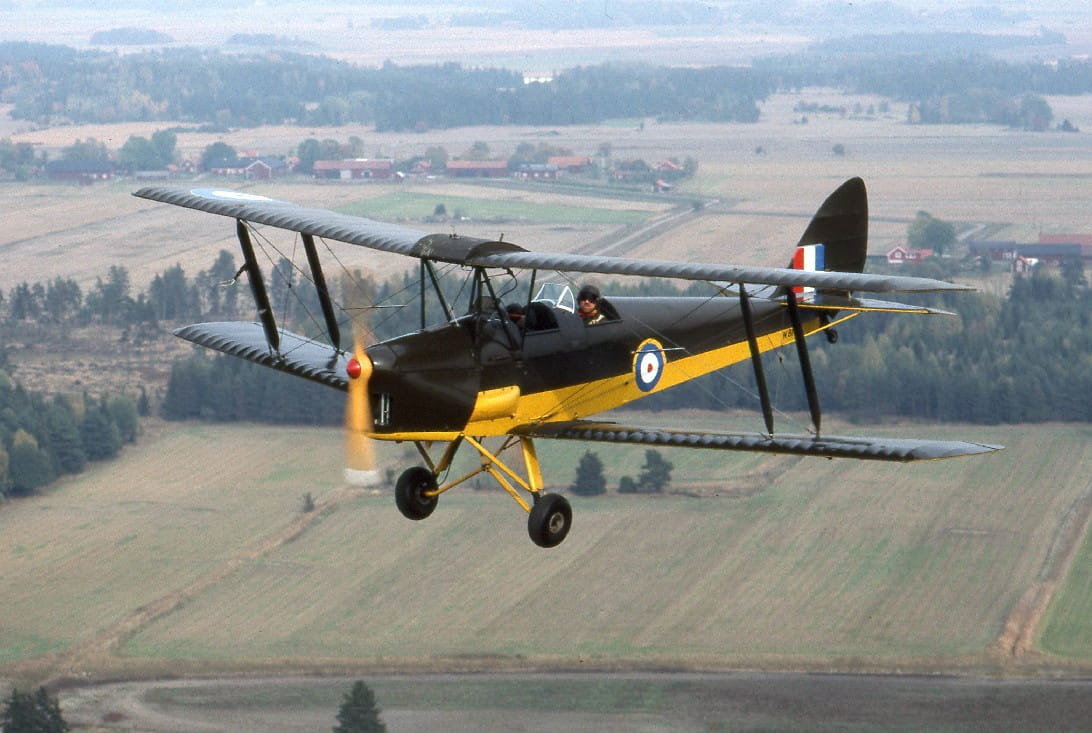
When the RAF needed to turn raw recruits into pilots in the 1930s, it didn't hand them a fast, sophisticated fighter and wish them luck. It put them in a de Havilland Tiger Moth — a forgiving little biplane that entered service at the Central Flying School in 1932 and went on to teach a whole generation to fly. The aircraft itself is a near-perfect picture of what the next phase of business growth actually requires: a mentor, solid fundamentals, and the humility to learn before you climb.
The Instructor in the Seat Behind You
The Tiger Moth had two seats, one behind the other, and — critically — dual controls. The student flew the aircraft, but the instructor had a full set of controls too, and could take over the instant things went wrong. There's a phrase from that training that has survived nearly a century because it captures the whole relationship: “You have control… I have control.” The student does the flying, the learning, the mistakes — but never alone, and never beyond rescue.
That is exactly what a mentor or business coach offers at this stage. Not someone to run the business for you, but someone experienced sitting just behind you — letting you fly, letting you make the small, survivable mistakes that teach you the most, and stepping in before a recoverable wobble becomes a crash. Most growing businesses don't fail for lack of effort. They fail trying to work out everything alone, the hard way, when someone who'd flown the route before could have shown them in an afternoon.
Recognising you need that second set of hands isn't weakness. In aviation it's standard procedure — the most basic safety principle there is. No reasonable person thinks less of a pilot for having learned from an instructor. The same grace should apply to you.
Forgiving Enough to Learn, Honest Enough to Teach
Here's the clever part of the Tiger Moth's design. In normal flight — taking off, cruising, landing — it was docile and forgiving, gentle enough that a nervous beginner could build confidence without being punished for every small error. But push it into aerobatics or formation work and it demanded real precision; a sloppy manoeuvre could quickly drop it into a stall or spin.
That combination was deliberate, and it's the mark of good training of any kind. It was kind to beginners on the basics, and unforgiving about bad habits on the things that mattered. Some instructors valued it precisely because it exposed the pilots who hadn't truly learned, while they were still safely close to the ground — not later, at altitude, in a far less forgiving machine.
A good mentor does the same for your business. They're patient with you while you find your feet, but honest about the weaknesses that will hurt you later: the pricing that doesn't add up, the cash flow you're not watching, the single point of failure that is still, quietly, you. Better to have those things called out now, on the trainer, than to discover them when you're moving fast and the stakes are high.
You Can't Skip to the Fast Aircraft
RAF training had a clear order to it. Pilots learned the fundamentals on the Tiger Moth at an Elementary Flying Training School first. Only once those basics were genuinely solid did they move on to a Service Flying Training School and the faster, heavier, more complex aircraft — and eventually to front-line types. The progression was not optional, and you could not buy your way past it. The fundamentals came first, every time, for everyone.
There's a hard truth in that for ambitious owners. You cannot skip the foundations and expect to handle a bigger, faster business. The systems and habits that carried you this far — the ones from the last post: the shared diary, the manual quoting, the everything-in-your-head approach — are the equivalent of basic flying skills. They need to be properly learned and properly built before you take on more speed, or the extra capacity will simply overwhelm you.
Growth exposes weak foundations mercilessly. A business doing twice the volume on shaky systems doesn't get twice as good — it gets twice as fragile. More customers means more dropped balls. More staff means more confusion if the processes underneath were never written down. The faster aircraft punishes the things the slow one let you get away with.
Build the Foundation, and the Next Phase Gets Easier
None of this is meant to discourage. The opposite, in fact. The pilots who learned their fundamentals thoroughly on a forgiving trainer, under a good instructor, went on to fly genuinely demanding aircraft — and many thrived. The early discipline was what made the later speed survivable.
Your next phase will be the same. It will still be tough; growth always is. But if you go into it equipped — with the right skills, the right systems, real support, and foundations you can actually trust — your odds of coming through it well are dramatically better than if you simply push harder on the setup that was only ever built for where you used to be. The choice isn't between hard and easy. It's between prepared and unprepared.
Practically, that means a few honest moves before the next climb: find someone who has flown this stage before and listen to them; get your fundamentals documented so they don't live only in your head; and shore up the systems that growth will lean on hardest, before it leans on them. Dull work, perhaps. But it's the dull work that keeps you in the air.
Earning the Next Aircraft
If you're sensing that the next stage of your business will ask more of you than the last, trust that instinct — it's the same one that keeps good pilots alive. The answer isn't to grip the controls tighter and hope. It's to get an instructor, master the fundamentals, and build the kind of foundation that makes faster flying possible rather than fatal.
Every pilot who ever did something remarkable started slow, in a simple machine, with someone wiser sitting behind them. There is no shame in that seat — only the beginning of everything that comes after it.
A lot of what we do is sit in that second seat — helping growing businesses get their digital foundations solid enough to take on what's next. If you ever want someone who's flown the route before to look over yours, Blue Pilot Agency is here.